
by Dr. Gary Ulrich
When amputation seemed like the only option for a badly injured soldier, three physicians at Mother of Mercy Hospital searched for another way. What they found—in an old cardboard box—helped them save his leg.
Editor’s Note: Dr. Gary Ulrich is a supporter of African Mission Healthcare who first came to know AMH through Dr. Tom Catena and Dr. Bill Rhodes, recipients of the 2019 and 2021 L’Chaim Prizes, respectively. In fall 2023, Gary independently spent two months at Mother of Mercy Referral Teaching Hospital in the Nuba Mountains of Sudan. The following is adapted from his reflection on that experience.
There are two ways to get into a swimming pool. You can take the steps and slowly ease yourself into the water, or you can jump right in.
When I made my first trip to Africa, Dr. Tom Catena and I joked that I had chosen the second option.
I had done a cannonball into the deep end.
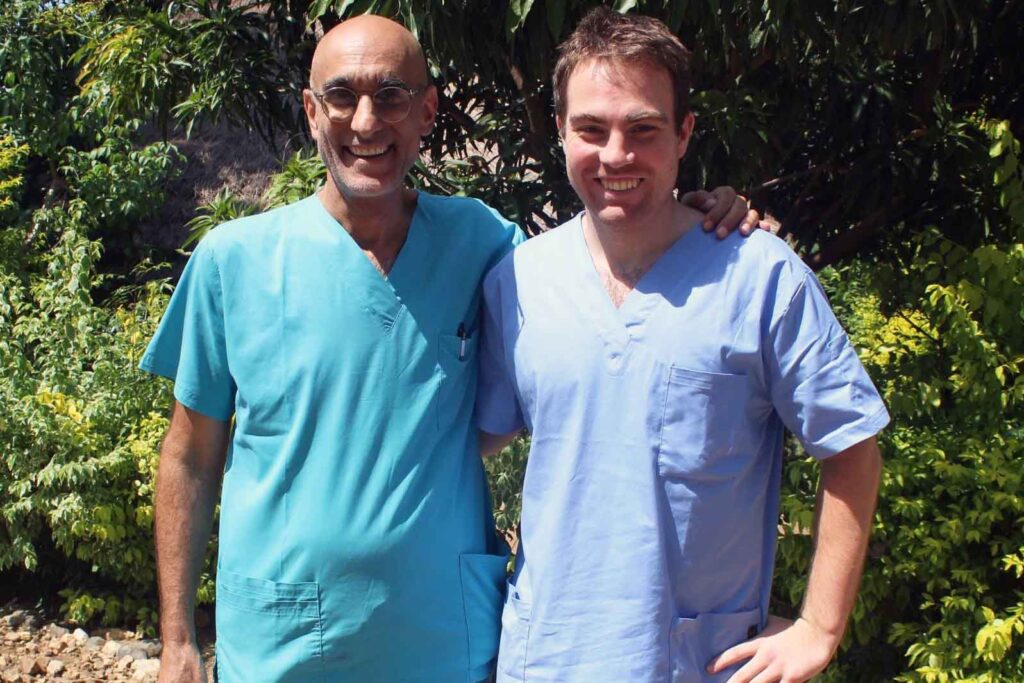
My destination was the Nuba Mountains of Sudan, a remote region whose people have endured years of conflict and isolation. For two months in the fall of 2023, I worked alongside Dr. Tom at Mother of Mercy Referral Teaching Hospital.
I had come hoping to use my medical training to serve people who had extraordinarily limited access to care.
I had no idea how much the experience would teach me about what it means to be a physician.
Through the Doors of Mother of Mercy
The patients who came through Mother of Mercy’s doors presented with conditions I rarely encountered at home: malaria, tuberculosis, complicated pregnancies, severe infections, childhood illnesses and traumatic injuries.
My particular interest was orthopedic surgery. I splinted fractures, treated children with clubfeet, cared for painful joints and assisted with medically necessary amputations.
Then one patient arrived whose case I will never forget.
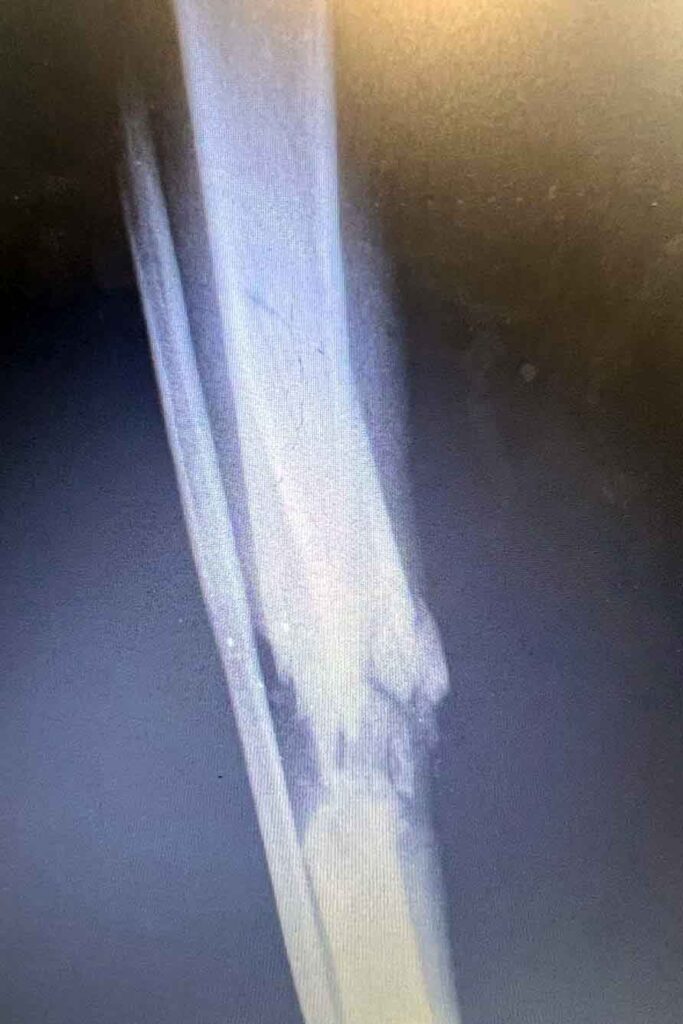
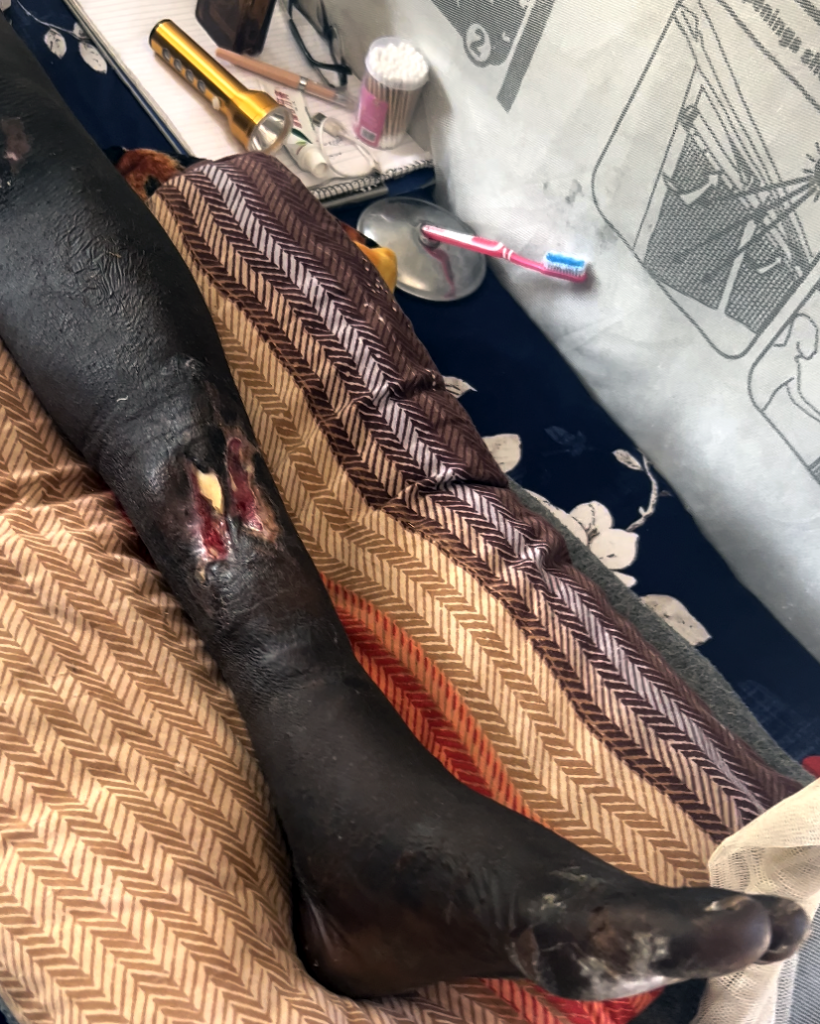
He was a Nuba soldier with a severe lower-leg injury caused by artillery fire. His tibia—the major bone in the lower leg—had been fractured, part of the bone was missing, and the open wound had developed a serious bone infection.
Previous treatment had failed.
Our options were disappearing.
And increasingly, one option seemed unavoidable:
Amputation.
One Patient. Very Few Options.
In a well-equipped hospital, we would have had sophisticated materials and several surgical approaches available to us. In Nuba, we didn’t.
Because the bone was infected, placing a metal rod or plate inside the leg risked allowing the infection to persist.
After discussing the case with Dr. Tom and Dr. Bill Rhodes, a visiting American plastic surgeon based in Kenya, I proposed another possibility: an external fixator—a device that could stabilize the broken leg with the main supporting structure outside the body and away from the infected bone.
Tom and Bill agreed it was worth trying.
There was just one problem.
We didn’t know whether Mother of Mercy had one.
A Solution in an Old Cardboard Box
I started searching.
Cabinets. Closets. Supply rooms. Anywhere an old piece of orthopedic equipment might have been stored.
Eventually, I found a cardboard box that appeared to have been sitting there for about a decade.
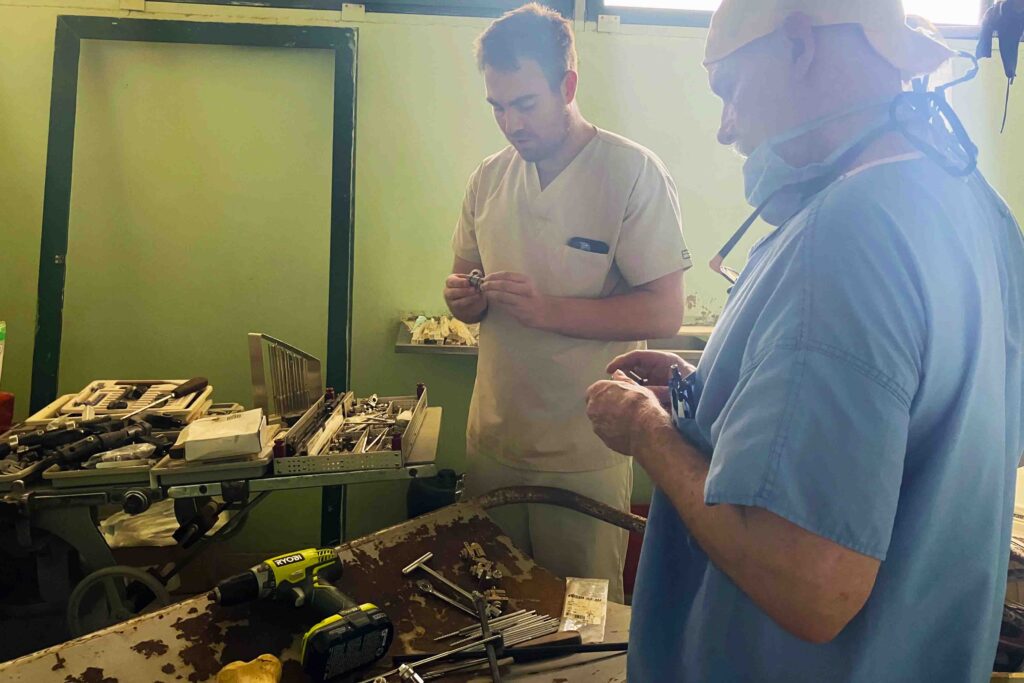
Inside was an old, dusty external fixation device.
In another hospital, it might have been considered outdated equipment.
Here, it represented something entirely different:
A chance to save a man’s leg.
But we still had another problem.
A significant portion of his tibia was missing, and removing the infected bone would make that gap even larger.
The sophisticated bone-regeneration techniques available in developed countries weren’t available to us. So we turned instead to a surgical technique developed more than 100 years ago: the Huntington procedure.
The concept was ingenious. We would use a portion of the patient’s fibula—the smaller bone in the lower leg—to help bridge the missing section of his tibia.
Old equipment. An old surgical technique.
And one decidedly nontraditional piece of surgical equipment:
A household garage drill, prepared for sterile use.
That last detail comes directly from Gary’s account, which says they used a home-owned garage drill wrapped in sterile towels and Betadine.
Choosing to Save the Leg
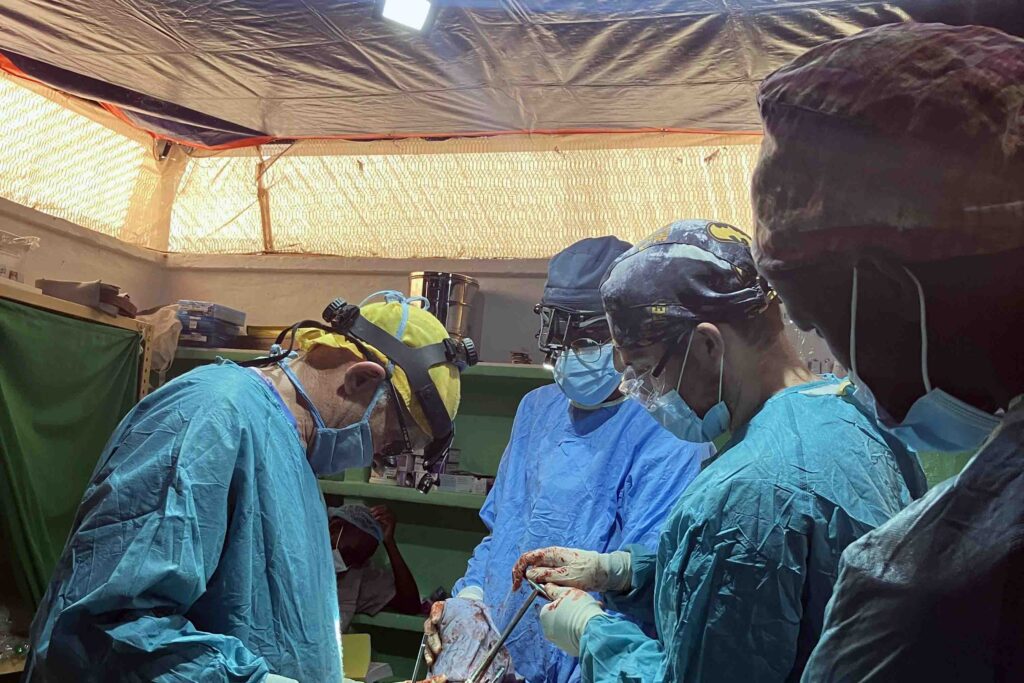
Dr. Catena, Dr. Rhodes and I operated together.
We removed infected bone, transferred part of the fibula to bridge the defect in the tibia, and used the external fixation device we had discovered to stabilize the leg.
According to my experience there, it was the first external fixation performed in the Nuba Mountains.
We had begun with a patient facing the very real possibility of losing his leg.
Instead, we had found another way.
What It Means to Care
Years ago, physician Francis Peabody famously observed that the secret of caring for a patient is, quite simply, caring for the patient.
I have thought about that often since leaving Nuba.
At almost every point in this patient’s case, there was another reason to give up. We lacked the resources we would have had in the United States. The bone was infected. Part of it was missing. We didn’t even know whether we had the equipment necessary to stabilize the fracture.
But instead of accepting amputation as inevitable, we kept looking for another solution.
We cared to save our patient’s leg. We cared to find a solution.
And in a place as remote, isolated and resource-limited as the Nuba Mountains, we did just that.
That lesson has stayed with me in every patient I have cared for since.
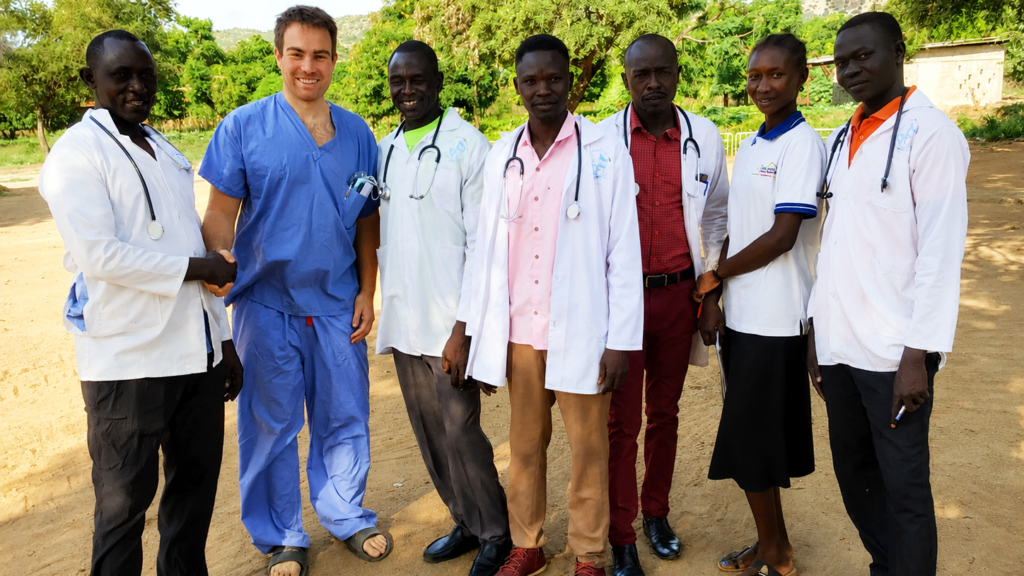
Dr. Tom Catena and Dr. Bill Rhodes have been exceptional mentors in my young career. Their dedication to people in some of the world’s most underserved places continues to remind me what it means to be a physician.
It was an honor to serve in the Nuba Mountains. The experience shaped me more than I could have imagined when I arrived.
Which brings me back to that swimming pool.
Sometimes, you have to trust the voice telling you to jump into the deep end.
You never know how big a splash it might make.
— Gary Ulrich, MD
About Dr. Gary Ulrich
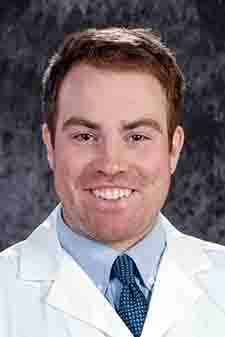
Gary Ulrich, MD, is an orthopedic surgery resident physician at LSU Health Shreveport. He earned his medical degree from Indiana University School of Medicine in 2022 and completed a general surgery internship at the University of Toledo College of Medicine and Life Sciences.
Hope is happening every day.
Across Africa, dedicated physicians and healthcare workers are caring for patients in places where medical resources are scarce but determination is not.
Discover more Stories of Hope from African Mission Healthcare.