
Across mission hospitals in Sudan and South Sudan, African Mission Healthcare is helping restore lifesaving medical equipment—and equipping local teams to keep it working.
by Elizabeth Mwai, ICEE (Infrastructure, Construction, Engineering, and Equipment) Program Coordinator, with the support of Ian Ndegwa, ICEE Program Coordinator
Before sunrise, families across Sudan and South Sudan begin long journeys in search of healthcare. Some carry children struggling to breathe. Others accompany elderly relatives weakened by illness or mothers enduring difficult labor. Many travel for hours—and some for days—to reach hospitals where they know care is available.
But behind every successful operation, accurate diagnosis, safely delivered newborn and patient receiving lifesaving oxygen is something most patients never see:
Medical equipment that works when it is needed.
When that equipment fails, healthcare can slow down—or stop altogether.

Sometimes the Answer Isn’t a New Machine
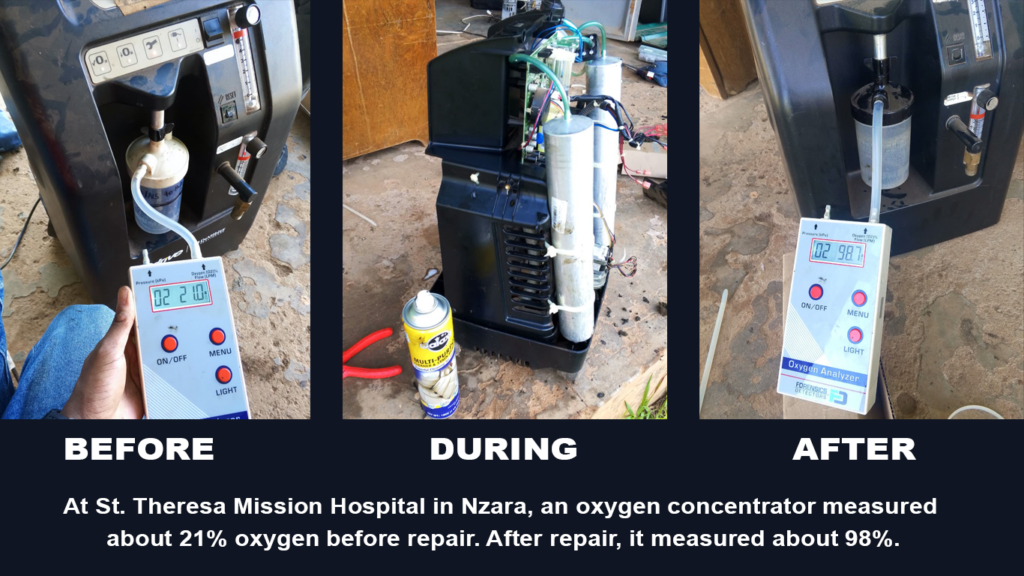
At St. Theresa Mission Hospital in Nzara, South Sudan, several oxygen concentrators had stopped functioning properly. In a hospital where oxygen can mean the difference between life and death, a broken concentrator is more than an equipment problem. It is a patient-care problem.
Replacing four machines would have cost approximately $4,000.
Instead, they were repaired for just $768.
And the result wasn’t simply money saved. Four oxygen concentrators went back into service, once again providing lifesaving oxygen to patients who need it.
Repairing More Than Equipment
The same approach extends far beyond oxygen concentrators.
At Mother of Mercy Teaching and Referral Hospital in Gidel, years of power fluctuations and limited preventive maintenance had affected critical medical equipment. During an April 2026 biomedical support visit, equipment used in eye care, laboratory services, operating theatres and oxygen delivery was restored to reliable operation.
At St. Daniel Comboni Hospital in Wau, improvements to power management and medical equipment strengthened operating-theatre services and helped protect valuable equipment from unnecessary wear. Oxygen concentrators and incubators were returned to service, surgical equipment was repaired, and staff received training in the safe use and care of medical equipment.
At St. Theresa in Nzara, servicing extended into the theatre, dental and eye clinics, neonatal care and patient monitoring.
The individual repairs can sound small. Their consequences are not.
Every functioning oxygen concentrator means another patient can receive oxygen. Every calibrated laboratory analyzer gives clinicians greater confidence in the results guiding treatment. Every reliable theatre light supports safer surgery.
And every machine repaired rather than unnecessarily replaced preserves scarce resources for other patient needs.
Teaching People to Keep Hope Running
Repairing today’s broken equipment is only part of the work.
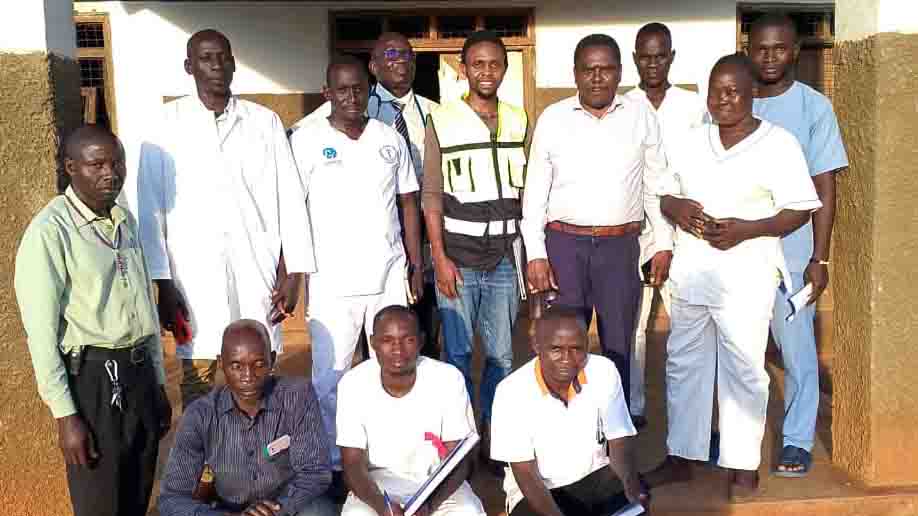
During these visits, hospital staff and local technicians also received practical training in equipment maintenance, safe operation and ways to prevent future breakdowns.
That matters because the goal is not to make hospitals perpetually dependent upon someone arriving from outside to fix a machine. It is to strengthen the people already there.
A repaired oxygen concentrator can serve patients today.
A trained biomedical team can keep serving patients long after the repair visit is over.
What Patients Never See
Patients may never know who worked behind the scenes to ensure that a theatre light switches on, an oxygen concentrator delivers the oxygen it should, or a laboratory analyzer produces an accurate result.
They don’t need to.
What matters is that when a mother arrives in labor, when a child struggles to breathe, or when a surgeon enters the operating theatre, the equipment needed to care for them is ready.
Across Gidel, Nzara and Wau, stronger biomedical systems are making healthcare safer, more reliable and more sustainable.
Because sometimes hope looks like a new hospital or a new operating theatre.
And sometimes, it looks like a broken machine working again.
Help Keep Lifesaving Care Working
African Mission Healthcare strengthens mission hospitals across Africa with the people, equipment, infrastructure and expertise they need to provide high-quality care. Your support helps hospitals make limited resources go further—and keeps lifesaving care available to the patients who depend on it.