
In Hargeisa, practical training and donated monitoring equipment are helping anesthesia providers prepare for the patients who will need them.
By Ray R. Harris
At a training station in Hargeisa, a participant works beside a patient monitor and a medical mannequin. Here, there is room to practice—to work with the equipment and strengthen skills before a patient’s life depends on the next decision.
That is the purpose of preparation: to do the learning before the emergency.
In July, anesthesia providers from across Somaliland gathered to strengthen their skills in trauma care and patient safety. The third Safe Anesthesia in Somaliland Conference, known as SANSOM 2026, took place July 7–9 at Edna Adan University Hospital in Hargeisa. The three-day gathering brought together the hospital, AIC Kijabe Hospital, African Mission Healthcare, and other partners for a capnography workshop followed by two days of continuing medical education.
The conference had a schedule. The emergencies these providers prepare for do not.
A workforce built through partnership
Somaliland had fewer than five qualified anesthesia providers when active training partnerships began in 2013. Since then, that workforce has grown into a network serving almost all regions of Somaliland—a change built through years of commitment and collaboration.
In her opening address, Dr. Edna Adan Ismail, the hospital’s founder and director, reflected on the long partnership with AIC Kijabe Hospital. She emphasized the importance of anesthesia providers to rural and regional communities and her continued commitment to making safe surgical and anesthetic care more widely accessible.
SANSOM 2026 built on that foundation, bringing educators from Somaliland, Kenya, and Greece together to share their experience and strengthen local practice.
Understanding what each breath can reveal
The first day focused on capnography: monitoring carbon dioxide in a patient’s exhaled breath to help the anesthesia team assess breathing during care.
Donated capnographs were paired with training in how to use the equipment, interpret its readings, and care for it. Participants worked through clinical cases and practical questions about what the monitor was showing them. The goal was not simply to make equipment available, but to help providers use it effectively and keep it working.
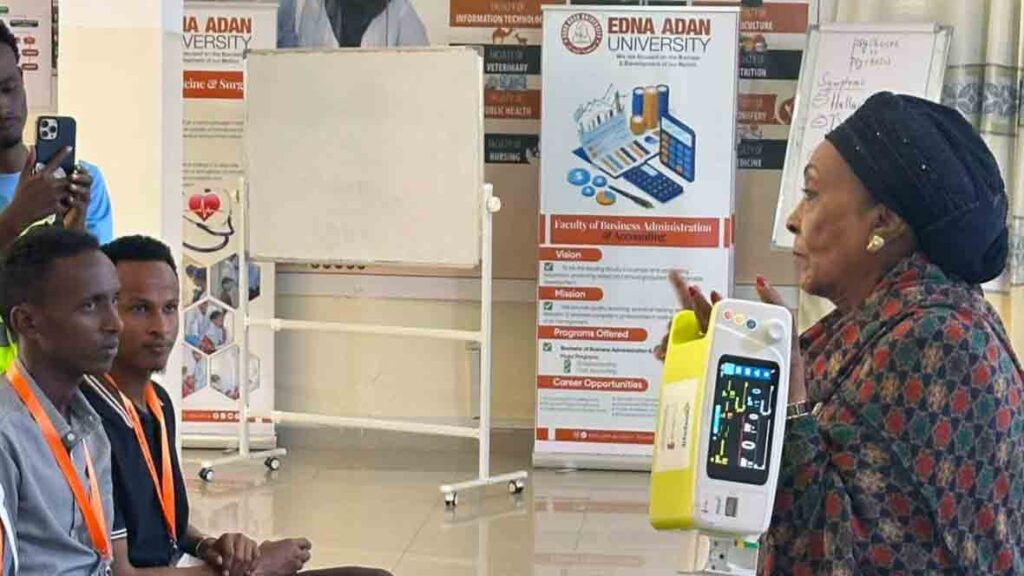
A monitor and a trained provider belong together. The equipment supplies information; the person caring for the patient must understand what that information means.
Practicing for the moments that matter
The next two days centered on “Anesthesia for the Trauma Victim.” Sessions covered the early assessment and resuscitation of injured patients, airway management, shock, traumatic brain injuries, and pain management. Hands-on simulations gave participants opportunities to practice alongside the teaching sessions.
The program also addressed the care of children and pregnant trauma patients, teamwork during mass-casualty emergencies, and practical procedures. Case discussions explored the challenges of caring for seriously injured patients where resources are limited.
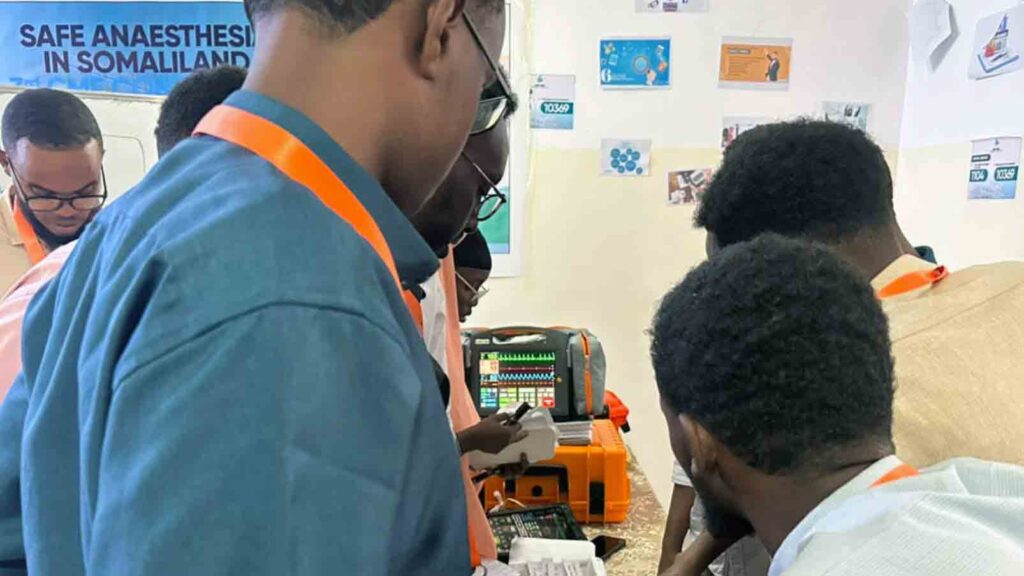
For participants, the practical learning stood out.
“What I liked most was the capnography workshop,” one participant wrote, describing it as an opportunity that “makes me stronger than previous years.” Another highlighted learning about capnography and head trauma: “It improves my knowledge of anesthesia and patient care.”
Among the 56 participants who completed the feedback survey, 54 agreed or strongly agreed that they felt more confident in their ability to provide safe anesthesia after the conference.
That feedback is encouraging. The next task is to help carry the learning from the training room into everyday practice.
Beyond the conference
Organizers recommended developing a local training-of-trainers program so that Somaliland’s anesthesia leaders can teach colleagues and provide continuing clinical support. They also recommended tracking the donated capnographs to understand how they are being used and ensure they remain functional and properly maintained. These are proposed next steps for building on the conference’s work.
The aim reaches beyond a successful workshop or a certificate of completion. It is to strengthen the people and systems patients will depend on long after the gathering ends.
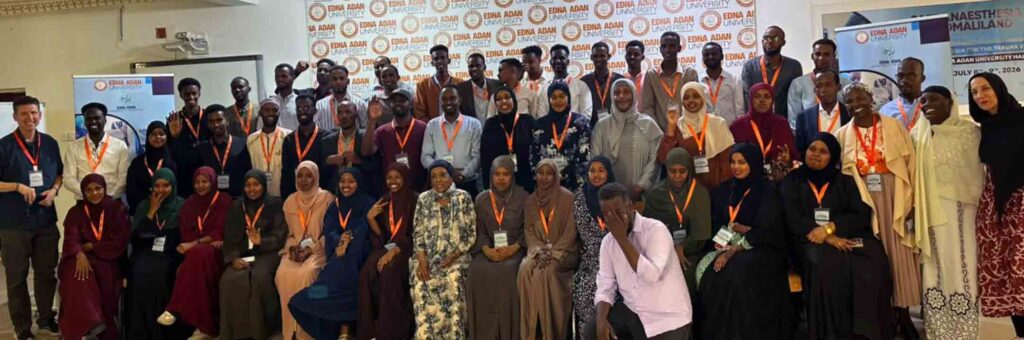
African Mission Healthcare works alongside hospital partners to train healthcare professionals and strengthen surgical care. That work brings together people, equipment, and the preparation needed to serve patients.
A patient may never know about a conference in Hargeisa. But helping prepare the person at that patient’s bedside is one way generosity can reach them.
Help strengthen care for the next patient.
Support African Mission Healthcare’s work with hospital partners to train healthcare professionals, equip facilities, and expand access to care.