
Editor’s Note: Dr. Gary Ulrich is a supporter of African Mission Healthcare who first came to know AMH through Dr. Tom Catena and Dr. Bill Rhodes, winners of the 2019 and 2021 L’Chaim Prize, respectively. In Fall 2023, Gary spent two months at Mother of Mercy Referral Teaching Hospital in the Nuba Mountains of Sudan. In 2025, he also spent a month at Kapsowar Hospital in Kenya, where he served alongside Dr. Rhodes. That visit was likewise undertaken independently. The following is his personal reflection on his time in the Nuba Mountains.
by Dr. Gary Ulrich
There are two ways to get into a swimming pool.
You can either take the steps to slowly ease into the water, or, alternatively, you can jump right in, immersing yourself in the water all at once. In applying this analogy to world travel, Dr. Tom Catena and I joked that for my first trip to the African continent, I definitely did a cannonball jump into the deep end when traveling to the Nuba Mountains of Sudan.
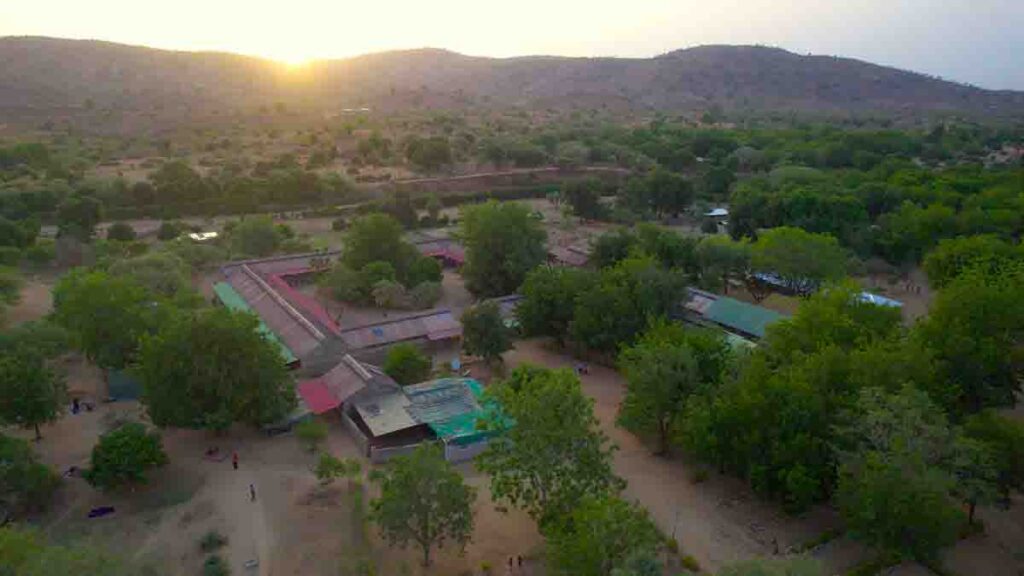
The Nuba Mountains: A Homeland Under Pressure
The Nuba Mountains represent an area that has been subject to warfare due to political and tribal unrest. The conflict reached its peak in 2011, when the southern part of the country seceded from the north to become the country of South Sudan – the newest country in the world. Unfortunately, the Nuba Mountains, located on the border between Sudan and South Sudan, was not included in South Sudan’s secession despite the Nuba politically aligning with South Sudan. Sudan negotiated to retain the Nuba Mountain territory for its economic natural resource value.
Since 2011, the Sudan government has engaged in warfare against the Nuba Mountains region, targeting civilians, including innocent women and children. Deemed as “The Worst Atrocity You’ve Never Heard Of” by the New York Times, Sudan’s tactic is to scare off the Nuba people, hoping they flee their homeland into South Sudan, thereby leaving the natural resource-rich land behind for Sudan to keep. But if you ask anyone from Nuba, they are determined to fight for their homeland.
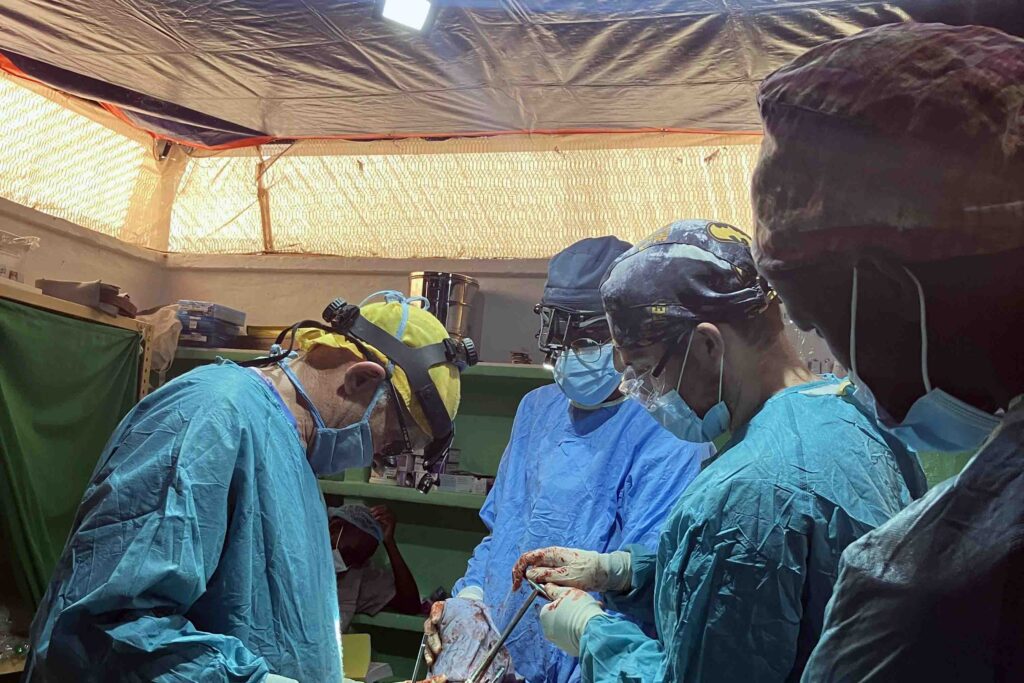
Through the Doors of Mother of Mercy Hospital
For two months in the fall of 2023, I found myself in the Nuba Mountains warzone. Inspired to work alongside American physician Dr. Tom Catena, MD, who has made it his life’s work to care for millions of people at Mother of Mercy Hospital, I too was hoping to meaningfully serve humanity with my medical degree.
We cared for all pathologies that walked through Mother of Mercy’s doors – leprosy, tuberculosis, malaria, intestinal intussusception, ectopic pregnancies, necrotizing fasciitis, hydrocephalus, goiters, retinoblastoma, and so much more. But as a physician versed in orthopedic surgery, I found myself most zealous caring for the orthopedic pathology, which included splinting long bone fractures, placing Ponseti casts for clubfeet, injecting corticosteroid into inflamed joints, and performing medically necessary amputations.
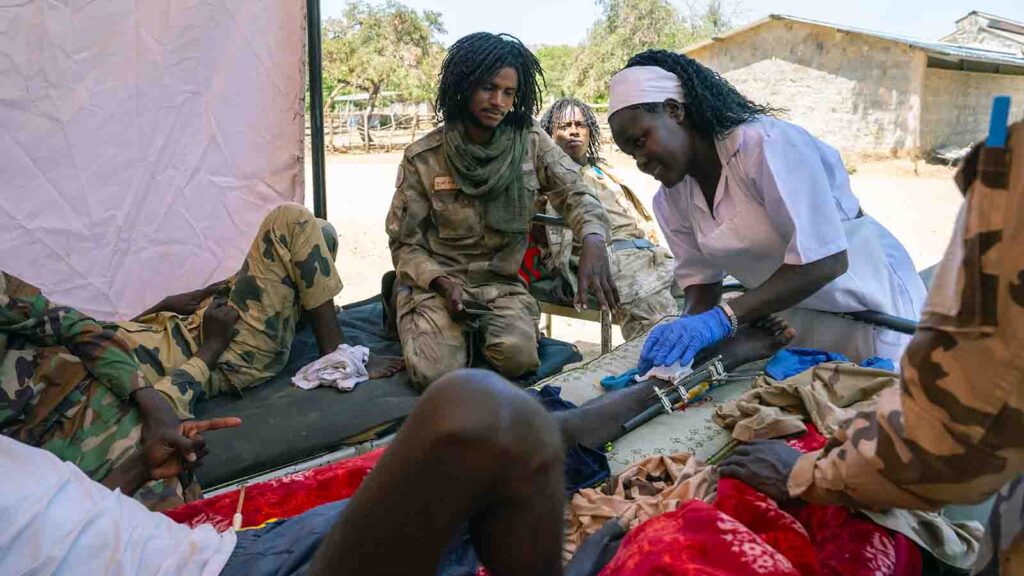
One Patient, Few Options
However, the most meaningful case to me was when a Nuba soldier presented with a chronic, open tibial midshaft fracture from artillery fire while fighting for his Nuba homeland. The care options the patient faced were limited given the chronicity, segmental bone loss, and failure of previous nonoperative care. Moreover, subsequent osteomyelitis (bone infection) had ensued at the open fracture site. Amputation surfaced as a leading option given the limited resources of the Nuba Mountains, especially lacking antibiotic spacer material, which would have been the standard treatment in a developed country. Further, we could not place an intramedullary nail or metal plate over the infected bone, as the overlying metal would harbor the infection.
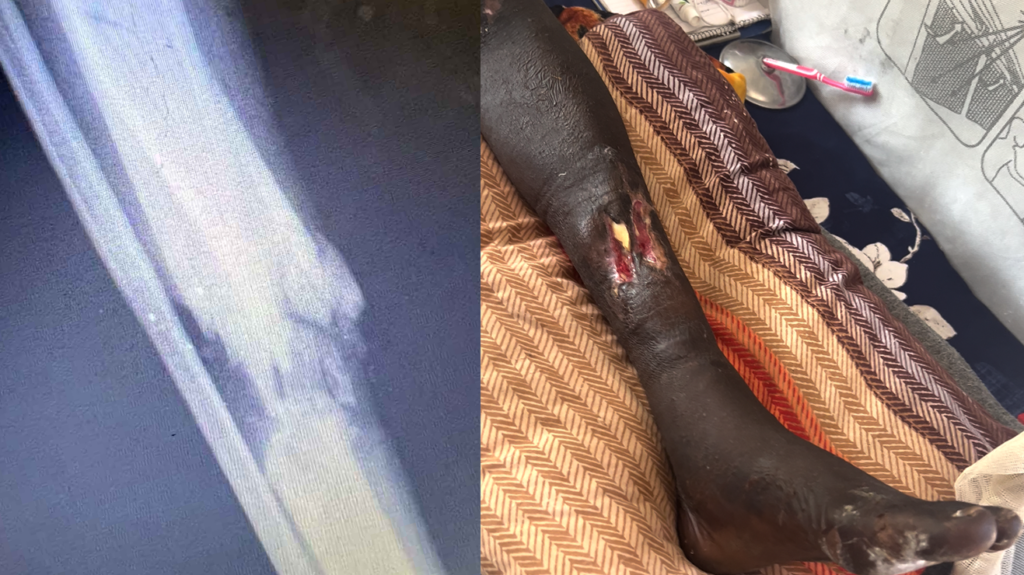
Altogether, our options were very limited. However, after much thought with Dr. Tom Catena and Dr. Bill Rhodes (a visiting American plastic surgeon based in Kenya), I proposed the idea of doing an external fixation to stabilize the fracture from outside the body. In this way, the metal fixation would still stabilize the fracture but now be outside of the body away from the infected bone. We all agreed it was worth a shot. However, one question remained – did Mother of Mercy Hospital have an external fixation device?
A 100-Year-Old Technique for a Modern Problem
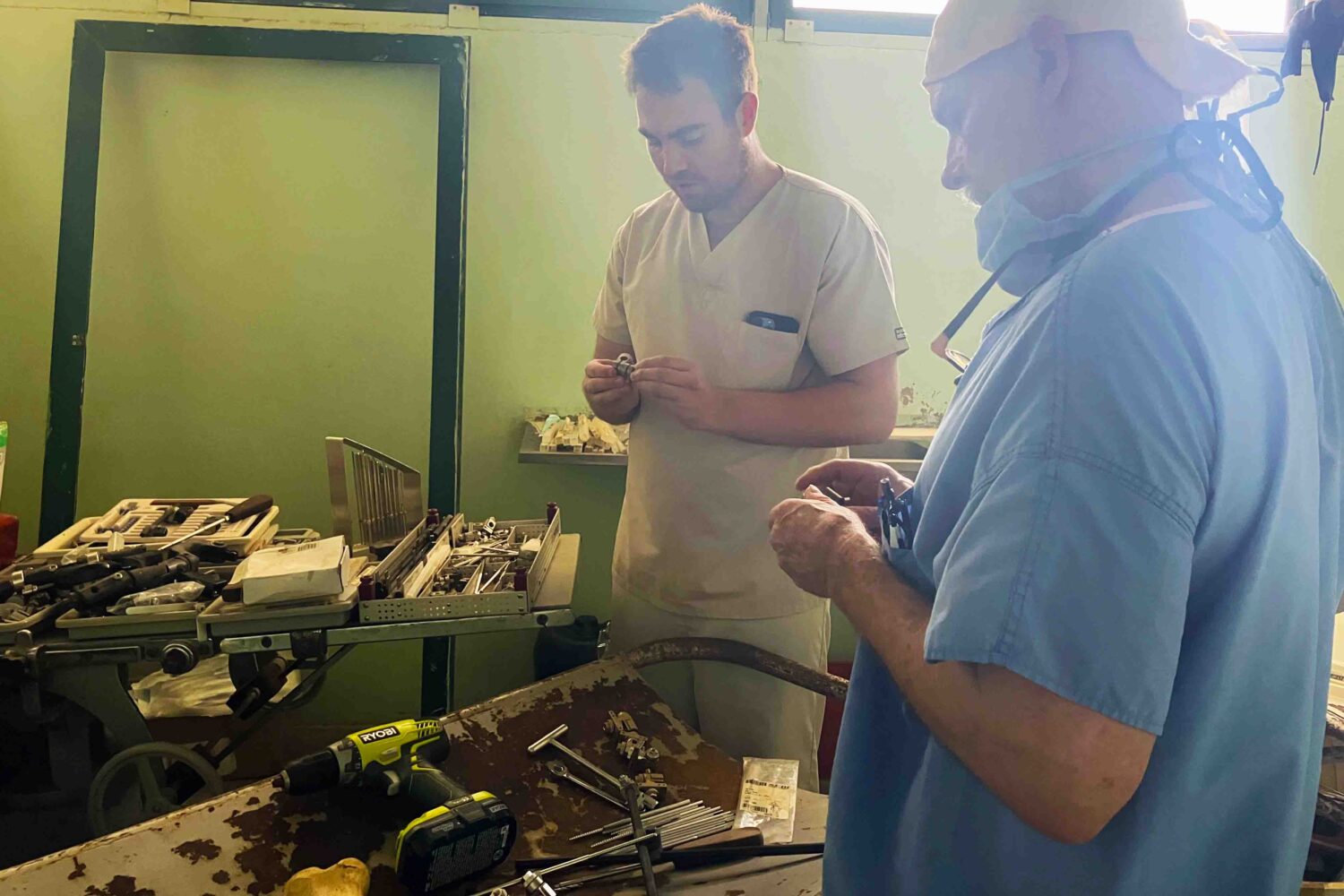
In developed countries, external fixation devices are readily available; however, in the Nuba Mountains, even the simplest needs can be absent – take for instance, how the bar of soap used to scrub cases was even rationed. Nonetheless, I went on a scavenger hunt throughout Mother of Mercy Hospital, looking far and wide for any existence of an external fixation device. Searching cabinets, closets, and supply rooms, I fortuitously stumbled upon an old cardboard box dated from 10 years prior. As I opened the box, an expired, dusted external fixation device stared back at me. What was once viewed as an outdated implant worthy of donation now represented the solution to saving our Nuba soldier’s leg.
Even with the external device in hand, there still remained a problem – the patient’s segmental bone loss. In other words, the patient was missing bone at the fracture site that would only be exacerbated after debriding the infected bone away during the surgery. Something had to be done to replace the patient’s missing bone. In a developed country, the treatment would entail sophisticated bone regeneration techniques, such as a Masquelet procedure or an Illizarov distraction osteogenesis. Needless to say, these options were not available in Nuba. Rather, the solution lay in a technique described over 100 years ago, one known as the Huntington procedure, seldom used in modern medicine.
The Huntington procedure entails taking a segment of the ipsilateral (same side) non-weightbearing fibula bone and transferring it to the tibia to structurally replace the tibia’s bone loss. In essence, the Huntington procedure is a “tibialization of the fibula.” With a carefully controlled weight-bearing restriction protocol and keen patience, the fibula donor graft eventually incorporates to fill the void of the tibia. Using a home owned garage drill wrapped in sterile towels and betadine, Dr. Catena, Dr. Rhodes, and I performed the first ever external fixation in the Nuba Mountains to save our patient’s leg.
What It Means to Care
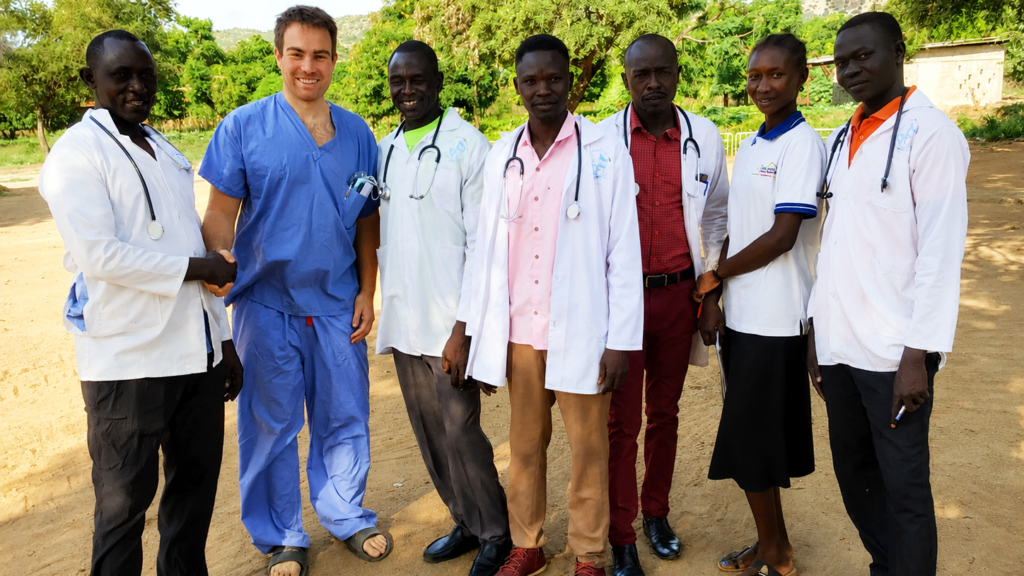
In a Harvard Medical School address in 1926, Dr. Francis W. Peabody compassionately stated that “one of the essential qualities of the clinician is interest in humanity, for the secret of the care of the patient is in caring for the patient.” The more I reflect, the prouder I become of how Dr. Catena, Dr. Rhodes, and I handled our patient’s case. Obstacles arose from every direction, but instead of giving in to the option of amputation, we cared for our patient. We cared to save our patient’s leg. We cared to find a solution. And in an area as remote, isolated, and resource limited as Nuba, we did just that. It’s a lesson I apply to the patients I care for to this day.
Dr. Tom Catena and Dr. Bill Rhodes have been exceptional mentors in my young career. Their dedication to humanity in the most dire, underserved areas of the world motivate me and remind me of what it means to be a true physician. It was an honor to serve in the Nuba Mountains, and its experience has humbly shaped me more than I could have ever imagined.
Truly, sometimes you need to follow the intuition telling you to jump in the deep end of the pool. Time will tell how big of a splash you’ll make.
Gary Ulrich, MD
About Dr. Gary Ulrich
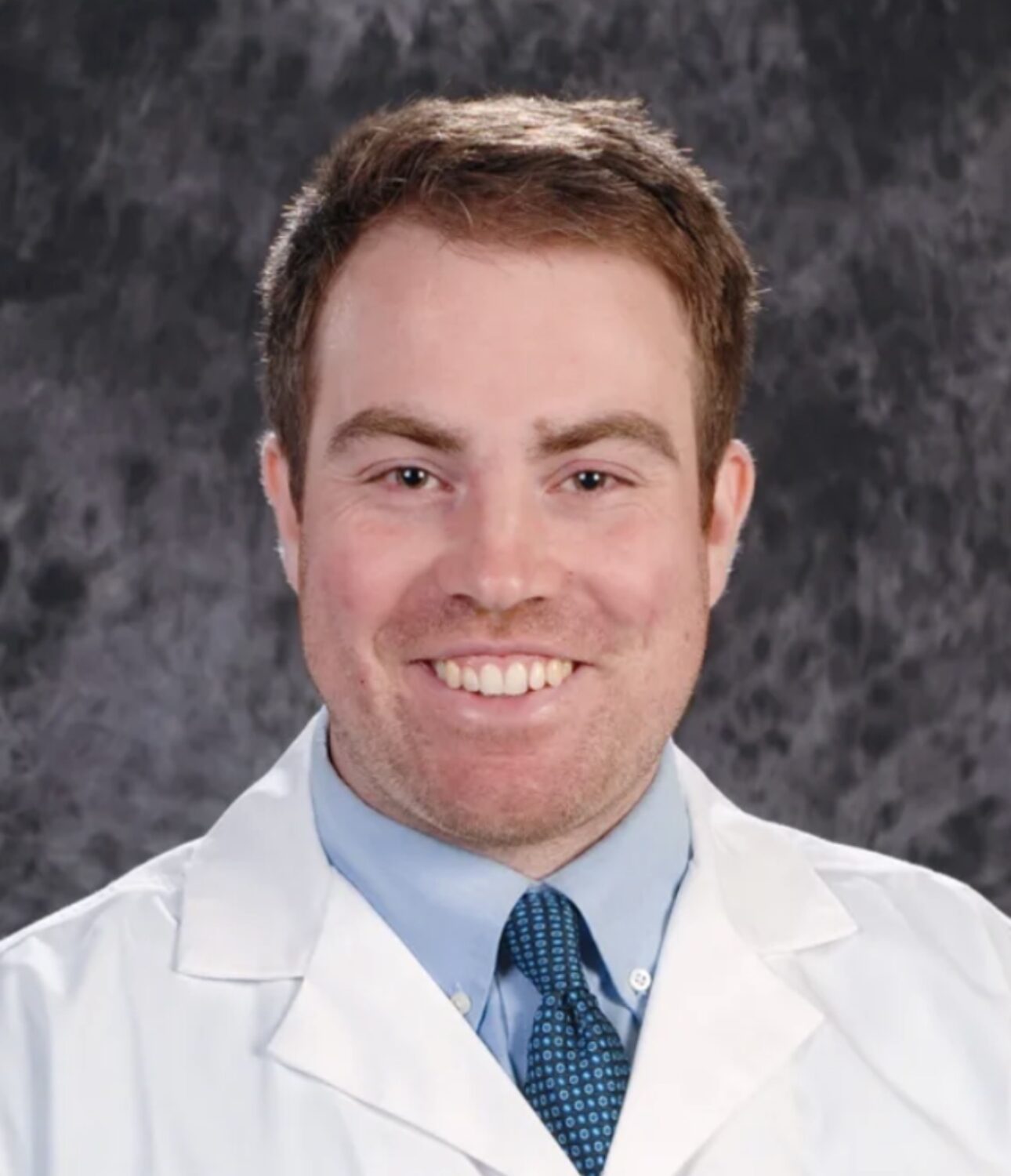
Gary Ulrich is currently an orthopedic surgery resident physician at LSU Health Shreveport. He earned his medical degree at Indiana University School of Medicine (’22) as well as a general surgery internship at University of Toledo College of Medicine and Life Sciences (’25).
Hope is happening every day.
Across Africa, dedicated physicians and healthcare workers are caring for patients in places where medical resources are scarce but determination is not.
Discover more Stories of Hope from African Mission Healthcare.